
North Korea missile launch raises fresh questions over regional security balance
Seoul, April 19, 2026 (Forelines) — North Korea’s latest missile launch on Sunday has once again drawn attention to the fragile security situation in Northeast Asia, where diplomacy remains stalled and military signalling has become routine. South Korea’s military said it detected…
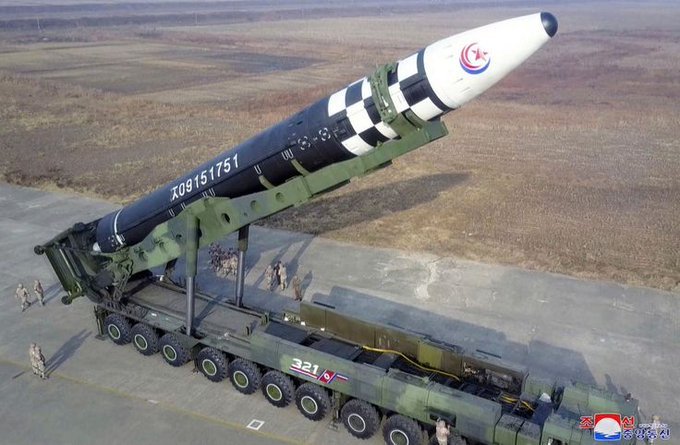
Seoul, April 19, 2026 (Forelines) — North Korea’s latest missile launch on Sunday has once again drawn attention to the fragile security situation in Northeast Asia, where diplomacy remains stalled and military signalling has become routine.
South Korea’s military said it detected the launch shortly after it occurred from an area on North Korea’s eastern coast. The missile travelled eastwards over the sea, according to the Joint Chiefs of Staff, which said it is still analysing the system used and the purpose of the test.
Although officials did not immediately release detailed specifications, South Korea said it responded by increasing surveillance and maintaining coordination with US forces stationed in the country.
Japan confirmed the missile did not cross into its exclusive economic zone and reported no damage or disruption to commercial traffic. Prime Minister Fumio Kishida described the launch as unacceptable, warning that continued missile activity increases uncertainty in the region.
From Washington, the response focused on deterrence and alliance commitments. The US Indo-Pacific Command said North Korea’s actions continue to undermine regional stability, while the White House reiterated that it remains open to diplomatic engagement if Pyongyang chooses to return to talks.
North Korea itself has remained silent on this specific launch. However, it has consistently argued in the past that such tests are a necessary response to what it describes as hostile military exercises by the United States and South Korea. Pyongyang often frames its weapons programme as defensive, despite repeated United Nations sanctions prohibiting ballistic missile activity.
China urged restraint, saying that escalation serves no party’s interests and calling for renewed dialogue. Russia echoed similar concerns, warning that continued military activity risks further complicating an already tense regional environment.
A familiar pattern of escalation
Sunday’s launch fits into a broader pattern that has become increasingly familiar in recent years: North Korean missile tests often coincide with joint military drills conducted by the United States and South Korea. These exercises, which Washington and Seoul describe as defensive, are viewed in Pyongyang as rehearsals for invasion.
The result has been a cycle of action and reaction — military drills followed by missile launches, followed by diplomatic statements of concern, with little sustained progress toward negotiations.
Security analysts say this pattern has hardened over time, particularly as diplomatic talks between North Korea and the United States remain frozen. With limited communication channels open, military activity has become one of the few ways each side signals intent or dissatisfaction.
Growing capabilities, limited visibility
While North Korea’s missile programme has expanded significantly over the past decade, outside experts often have limited immediate access to technical data following each launch. That means early assessments from South Korean and Japanese authorities play a key role in shaping international understanding of each event.
In recent years, Pyongyang has demonstrated a broader range of missile systems and increased testing frequency, raising concerns among neighbouring states about both short-term stability and longer-term capability development.
However, without direct confirmation from North Korea or independent verification of technical details, many aspects of each launch remain under analysis in the hours and days that follow.
Uncertain diplomatic path ahead
Despite repeated calls for dialogue from the United States, South Korea, China and Russia, there has been little sign of a return to negotiations. Sanctions remain in place, military exercises continue, and missile tests periodically follow.
Sunday’s launch, while not unusual in isolation, reinforces how entrenched the current cycle has become — and how difficult it may be to break without sustained diplomatic engagement.
For now, the Korean Peninsula remains in a state of managed tension: not in crisis, but far from stability.
Cite this analysis
Disha Mishra, “North Korea missile launch raises fresh questions over regional security balance,” Forelines Analysis, 19 April 2026, https://forelines.com/north-korea-missile-launch-raises-fresh-questions-over-regional-security-balance/.

Written by