
Efforts to end Kurdish militant conflict in Turkey face Syria test
ISTANBUL/ANKARA, Jan 10 (Reuters) – Talks aimed at ending a 40-year-old militant conflict have fostered peace hopes in Turkey but the precarious situation of Kurdish forces in Syria and uncertainty about Ankara’s intentions have left many Kurds anxious about the path ahead…
From the Forelines news archive. This report was published on 10 January 2025, before Forelines moved its focus to research and analysis. See our latest research →
ISTANBUL/ANKARA, Jan 10 (Reuters) – Talks aimed at ending a 40-year-old militant conflict have fostered peace hopes in Turkey but the precarious situation of Kurdish forces in Syria and uncertainty about Ankara’s intentions have left many Kurds anxious about the path ahead.
Abdullah Ocalan, jailed head of the Kurdistan Workers Party (PKK) militant group, has been cited as indicating a willingness to call on the PKK to lay down arms in a peace process to end the insurgency he launched against NATO-member Turkey in 1984.
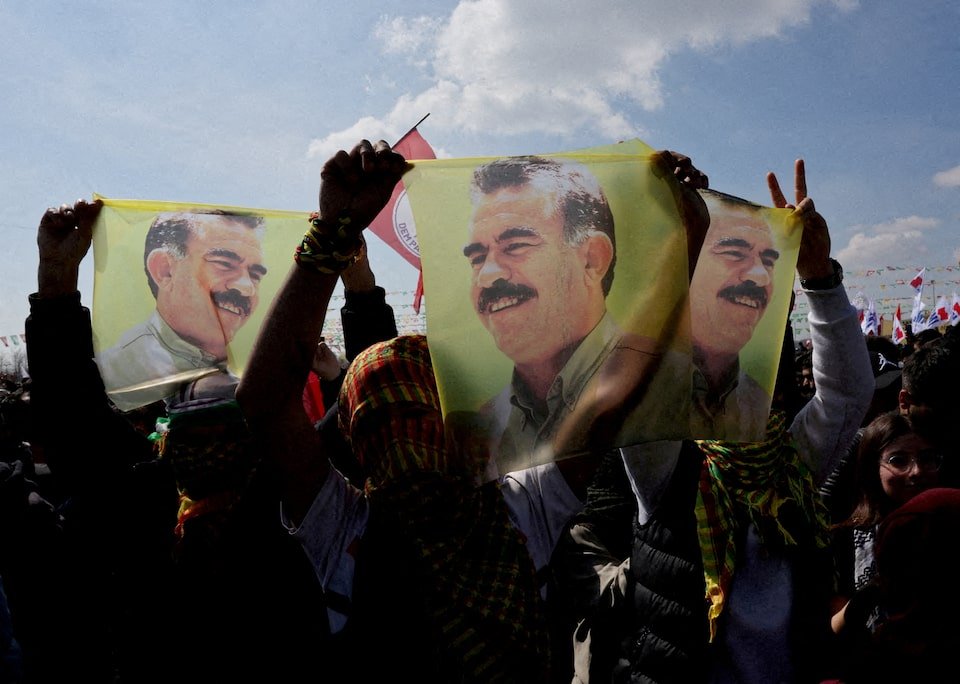
The conflict has killed more than 40,000 people, stunted development in the mainly Kurdish southeast and caused deep political divisions.
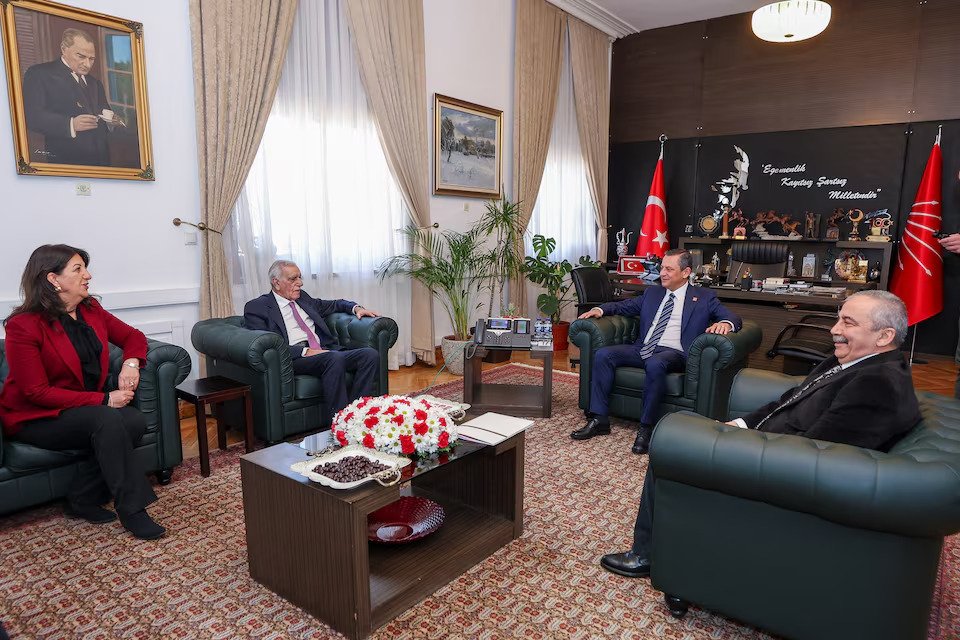
Turkey’s pro-Kurdish DEM Party met Ocalan in late December and has since held talks with other parties including President Tayyip Erdogan’s AK Party (AKP), to discuss Ocalan’s proposal, with both sides describing the talks as “positive”.
Two DEM sources told Reuters the party is now set to visit Ocalan again as soon as Jan. 15 in his prison on northwest Turkey’s Imrali island, where the 75-year-old has been held since 1999. They expect that meeting to yield a concrete plan for peace talks.
“We expect the process to take shape and a clear roadmap to be determined to establish the legal framework in the second meeting with Ocalan,” DEM Party parliamentary group deputy chair Gulistan Kilic Kocyigit told Reuters. DEM is the third-largest party in parliament.
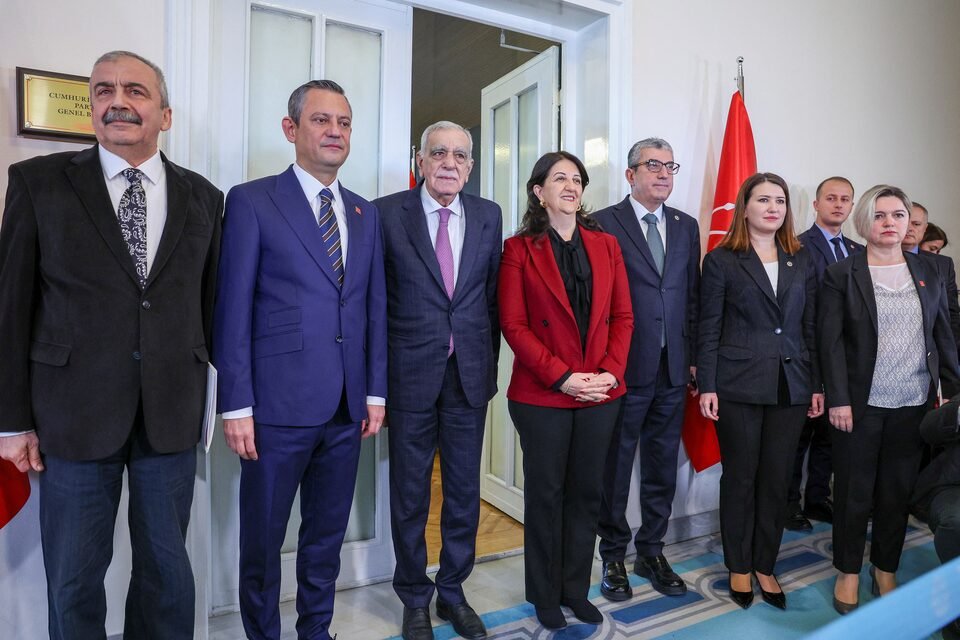
It was unclear what Ocalan would seek in any deal but DEM quoted him as referring to efforts for a “democratic transformation” in Turkey. Kurds have long sought more political and cultural rights, and economic support. DEM also demands Ocalan’s release.
The dynamics of any peace process have been transformed by the toppling of Bashar al-Assad in Syria, leaving Syrian Kurdish forces on the back foot with Turkey-backed forces ranged against them and the new rulers in Damascus friendly with Ankara.
Turkey has warned it could mount a cross-border military offensive into northern Syria against the Kurdish YPG militia unless they disband. It says they are terrorists and part of the PKK but they are also allied with the United States in the fight against Islamic State, complicating the issue further.
For now it is unclear how the fall of Assad could affect the prospects of the PKK laying down arms. A leading PKK figure indicated in an interview this week that the group supported Ocalan’s efforts but did not comment on the disarmament issue.
The leader of the Syrian Kurdish forces has proposed that foreign fighters, including from the PKK, would leave Syria as part of a deal with Turkey to avoid further conflict in the country.
“POINTING GUNS AND TALKING PEACE”
Kocyigit said that managing a peace process in Turkey against this background was the biggest test for Ankara.
“You cannot point guns at the Kurds in (Syria’s) Kobani and talk about peace in Turkey,” she said. “The Kurdish issue is a complex issue. It should be addressed not only with Turkey’s internal dynamics but also with its international dimensions.”
Turkey should accept that Kurds have a say in the future of Syria, she added.
Ankara has said little about the talks with Ocalan, launched after a proposal by Erdogan’s main ally in October, but a major AKP figure spoke optimistically after meeting a DEM delegation.
“We see everyone’s good-willed effort to contribute to the process,” AKP’s Abdullah Guler said on Tuesday, adding the goal was to resolve the issue this year. “The process ahead will lead to completely different developments that we never expected.”
He did not specify what these developments were, but another AKP MP said a climate for the PKK to lay down arms may be in place by February. Asked if there could be an amnesty for PKK members, Guler said a general amnesty was not on the agenda.
The leader of the main opposition Republican People’s Party, Ozgur Ozel, said a parliamentary commission should be set up with all parties to address the problems faced by Kurds.
In the southeast, Kurds are sceptical about peace prospects after past failures. That uncertainty is reflected in opinion surveys. A recent SAMER poll of some 1,400 people, conducted in the southeast and major Turkish cities, showed that only 27% of respondents expected the original call for Ocalan to end the conflict to evolve into a peace process.
The last peace talks collapsed in 2015, triggering a surge in violence and a crackdown on pro-Kurdish party members. Guler said the current process would in no way resemble those talks a decade ago, saying the situation had changed.
ERDOGAN’S STANCE IS CRUCIAL
Key to boosting confidence in the peace process would be an expression of support from Erdogan, according to DEM’s Kocyigit.
“His direct confirmation that he is involved in the process would make a world of difference. If he openly expresses this support, social support would increase rapidly,” she said.
Erdogan has so far kept up his hardline rhetoric against the PKK, saying after a cabinet meeting this week that “those who choose violence will be buried with their weapons” and repeating his oft-used warning of military action against Syrian Kurdish forces: “We may come suddenly one night”.
Erdogan said he believed that “ultimately brotherhood, unity, togetherness and peace will win” while warning that if this path is blocked, “we will not hesitate to use the iron fist of our state wrapped in a velvet glove.”
The importance of Erdogan’s comments was also stressed by Yuksel Genc, coordinator of the Diyarbakir-based pollster SAMER.
“The harsh rhetoric of Erdogan and his circle is preventing a revival of feelings of trust in the new process (among Kurds) on the street,” she said, noting concerns among many Kurds about what would happen to Kurds in Syria.
Domestically, Ankara has signalled a will to deal with the Kurdish issue, unveiling last month a $14 billion development plan aimed at reducing the economic gap between the southeast and the rest of Turkey.
An end to conflict would be widely welcomed across Turkey, but the government faces a balancing act given the widespread enmity among most Turks towards Ocalan and the PKK after four decades of bloodshed, with many opposing peace talks.
“I definitely do not support it. I am not in favour of such bargaining or talks. I consider this as a disrespect to our martyrs [soldiers] and their families,” Mehmet Naci Armagan, who works in the tourism sector, said in Istanbul.

Written by