
Iran begins week-long state funeral for slain leader Khamenei amid fragile ceasefire
TEHRAN, July 4 (Forelines) — Iran on Saturday commenced a week-long series of mass state funeral rites for late Supreme Leader Ayatollah Ali Khamenei, more than four months after he was killed in a joint U.S.-Israeli airstrike that marked the beginning of…
From the Forelines news archive. This report was published on 4 July 2026, before Forelines moved its focus to research and analysis. See our latest research →
TEHRAN, July 4 (Forelines) — Iran on Saturday commenced a week-long series of mass state funeral rites for late Supreme Leader Ayatollah Ali Khamenei, more than four months after he was killed in a joint U.S.-Israeli airstrike that marked the beginning of the recent war, according to state media dispatches.
The public mourning rituals, which began after the coffin was laid in state on Friday at the Imam Khomeini Grand Mosalla mosque complex in Tehran, are proceeding under heightened security following a newly brokered, preliminary ceasefire that paused active regional hostilities, Al Jazeera reports.
Iranian state media has projected public turnouts between 15 million and 20 million people across the multi-day event, with security officials telling The Hindu they anticipate maximum capacity crowds in the capital alone over the next three days.
Clerical officials have described the mass gatherings as a public referendum of support for the Islamic Republic. However, BBC monitoring reports emphasize that the event takes place against a backdrop of severe domestic polarization following months of war-related economic instability, soaring inflation, and localized protests prior to the conflict.
MULTI-CITY PROCESSION
According to an official itinerary published by regional news agencies, the funeral reflects an extensive state effort to mobilize regional support across multiple cities in both Iran and neighboring Iraq:
- July 4–5: Public viewing and international condolences at the Grand Mosalla complex in Tehran.
- July 6: A mass public funeral procession through central Tehran.
- July 7: Processions move to the theological seminary city of Qom.
- July 8: Caskets will be transferred to the Iraqi Shi’ite holy cities of Najaf and Karbala to accommodate regional allies and religious leaders.
- July 9: Final burial at the Imam Reza shrine in Khamenei’s home city of Mashhad.
An Associated Press dispatch from the venue noted that Khamenei’s casket lay inside a glass case alongside smaller coffins containing family members who died in the same February 28 strike, including his daughter and grandchild. Associated Press reporters observed that his signature black turban had been placed on top of the primary casket, an intentional symbolic reminder of his lineage as a direct descendant of the Prophet Muhammad.
SUCCESSION SECURITY AND DIPLOMACY
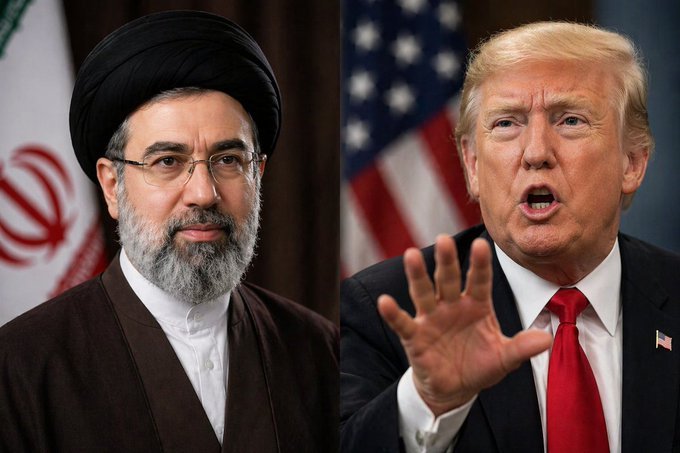
The new Supreme Leader, Mojtaba Khamenei—who was named successor by the Assembly of Experts on March 8—is not expected to attend the public ceremonies due to what intelligence sources characterize as acute security risks.
Associated Press and Reuters reporting indicates that Mojtaba has not appeared in a verified public video or photograph for 16 weeks, following unconfirmed regional reports that he may have sustained injuries during the initial airstrikes that killed his father.
Iranian security forces have heavily fortified the funeral venues with riot police and concrete barricades, while joint military commanders issued statements warning Western and regional adversaries against any military miscalculations during the mourning period.
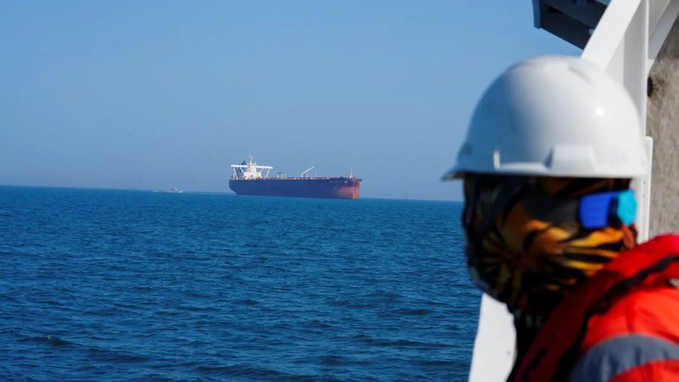
Concurrently, CBS News reported that formal diplomatic negotiations between Washington and Tehran in Doha over the security of the Strait of Hormuz have been officially paused until the conclusion of the burial on July 9, following a temporary de-escalation agreement reported by the New York Post.
International delegations from roughly 30 countries have arrived in Tehran to pay respects, according to official diplomatic tallies. While no Western nations were invited, The Hindu confirmed that high-level non-Western delegations have arrived, including India’s Union Minister of State Pabitra Margherita and Bihar Governor Syed Ata Hasnain, alongside representatives from China, Pakistan, Armenia, and Russia.
DOMESTIC AND ECONOMIC TENSIONS
Despite the large state-mobilized crowds chanting traditional mourning slogans broadcast on state television, independent regional reports indicate significant local dissent.
Dispatches from Agence France-Presse highlight that many residents have actively left Tehran to avoid the sweeping traffic, airspace, and commercial closures enforced by the Islamic Revolutionary Guard Corps (IRGC), which ordered the temporary shutdown of major hubs like the Tehran Grand Bazaar.
According to internal communications leaked to independent outlet Iran International, government organizations allegedly pressured major state and private corporations to absorb the costs of public food and refreshment stations along the route. The mandatory corporate funding has drawn quiet criticism from citizens facing a severe domestic economic crisis, where the average monthly income remains severely deflated relative to basic living standards.
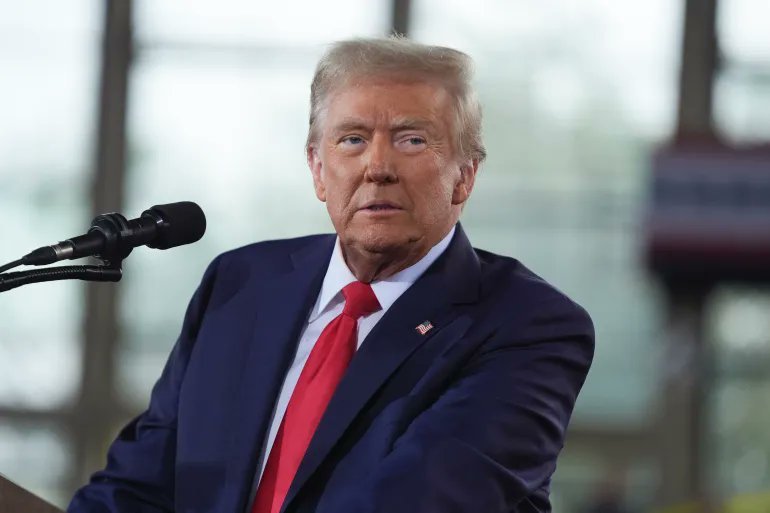
The funeral dates also coincide with the July 4 Independence Day celebrations in the United States. While Iranian officials did not comment on the timing, U.S. President Donald Trump referenced the ongoing regional pause during a public address on Friday, noting that the temporary de-escalation agreement effectively “gave them a week off for a funeral,” according to an India Today world desk monitoring report.

Written by
Forelines
Editorial Team
Research, analysis and reporting from the Forelines editorial team.